Explore how God reveals himself in Scripture, nature, and human history as both Creator and Savior. See his divine wisdom displayed for the good and flourishing of all humanity.
What we believe about God shapes how we live, love, and see the world. As Christians, our beliefs about who God is drive how we engage with others and navigate life’s challenges.
Because God is love, we’re called to love others with compassion and forgiveness. Believing that God is sovereign gives us peace even in uncertainty, knowing he works for our good. Since every person is made in God’s image, we view all people as possessing inherent worth and dignity.
The Christian faith is grounded in historical and empirical evidence. Scripture emphasizes eyewitness testimonies and points to creation itself as proof of God’s power and existence. Central to Christianity is the resurrection of Jesus, a historical event supported by early independent accounts and archaeological discoveries.
A vast number of scientific discoveries also confirm many biblical claims and strengthen our belief in God. As evidence accumulates, the reliability of Scripture becomes clearer, and our faith in God deepens.
God welcomes questions because he’s not threatened by honest investigation. Scripture encourages us to test everything and seek truth. The Bible repeatedly urges us to investigate and engage God in dialogue. When Thomas doubted the resurrection, Jesus didn’t get angry but offered physical proof.
The Bereans were praised for scrutinizing Scripture to verify teachings, and God answered Habakkuk’s anguished questions without condemning him. Even John the Baptist’s questions about Jesus were met with evidence to reinforce his faith. Honest investigation doesn’t weaken faith but refines and deepens trust in a God who is Truth.
Who is God?
God is the triune, self-existent, eternal, and unchanging Spirit who exists as one Being in three Persons: Father, Son, and Holy Spirit. These three persons are coequal, coeternal, and united in essence and purpose. He is the uncaused Creator and Sustainer of all things, wholly independent of creation yet intimately involved within it. God’s existence always has been and always will be (Psalm 90:2, Isaiah 43:13, Revelation 1:8).
Infinitely perfect in holiness, justice, love, wisdom, and power, he revealed himself in bodily form in Jesus Christ, whose life, sacrificial death, and resurrection reconciled humanity to God. As sovereign Ruler, he governs history with loving purpose, goodness, and redemptive authority over everything.
What is a “god”?
A “god” is broadly defined as a supernatural being possessed of superhuman powers who controls, creates, guides, or otherwise influences the world and humanity, demanding worship and obedience.
Throughout history, people have worshipped false gods. Ancient cultures worshipped a wide variety of false gods, often conceived as members of pantheons (think the Greek gods). People made figurines or physical idols as ways of focusing their attention on one god at a time in worship or sacrifice.
Humanity’s pursuit of false gods comes from our fallen nature and spiritual blindness. Though people possess knowledge of God, Romans 1:20–23, 25 shows how people deliberately choose to glorify images, idols, and created things rather than honoring the Creator himself.
But this misdirected worship reveals a deeper truth about human nature. God has placed eternity in the human heart (Ecclesiastes 3:11) and designed creation itself to reveal his eternal nature as Creator (Ecclesiastes 3:14). Every person carries within them an innate longing for the eternal and divine—a spiritual hunger that only the God of Scripture can fulfill.
God is Triune
The Bible makes known that the only true God exists as a Trinity: Father, Son (Jesus Christ), and Holy Spirit. He is one in essence yet exists eternally as three distinct (but not separate) persons, each fully and equally God, coequal in nature, attributes, and glory.
Though the Trinity is a divine mystery beyond human understanding, the Bible reveals that God’s nature is relational, loving, and bound together in perfect oneness (1 John 4:8; John 17:24; John 14:31)—and that he created us to share in the eternal love and fellowship of the Father, Son, and Holy Spirit (1 John 4:16).
This triune nature of God—one essence in three distinct persons—is not just a theological idea but something we see in the life of Jesus. For example, at Jesus’s baptism, the Father speaks from heaven, the Son is baptized, and the Holy Spirit descends like a dove—all three persons of the Trinity present together (Matthew 3:16). Later, when Jesus sends out his disciples, he tells them to baptize in the name of the Father, the Son, and the Holy Spirit (Matthew 28:19), revealing the equal authority and unified essence of all three persons in the work of salvation.
While it’s hard for our human minds to fully grasp how one God can exist as three persons, Scripture helps us understand what’s true. God reveals himself as One, not many. He is Father, Son, and Holy Spirit, always existing in perfect harmony and love. This means God isn’t a distant, solitary ruler watching from above, but a relational, loving Creator who invites us into that same eternal love.
God is the “I Am”
God is eternal, uncreated, and completely self-sufficient. He depends on nothing and no one to exist. Unlike everything else in creation, God simply is, always present, always faithful, and never changing.
God reveals this as his name to Moses in Exodus 3:14. When God sent Moses to take the people of Israel out of Egypt, Moses asked God his name. God did not identify himself by a proper name, the way people have names or how false gods like Baal, Dagon, or Moloch were named. God identified himself instead by revealing his nature in the tersest phrase: “I Am That I Am.” God told Moses to tell the Israelites that “I AM has sent me to you.”
God’s declaration of his name and his place as God of all history expressed his eternal nature, self-sufficiency, being the only true God, wholly distinct from all false gods, and active among his people and the world.
In John 8:58, Jesus says, “Before Abraham was born, I Am,” linking himself directly to God’s divine name. Jesus, thousands of years later, identified himself as God when he told the Jewish leaders, “Truly, Truly, I say to you, before Abraham was, I AM.”
How Does the God of the Bible Compare to Other Gods?
Many people believe all religions worship the same God or that the differences don’t really matter. But the God of the Bible makes distinct claims that set him apart and often directly contradict the teachings of other religions.
God declares himself the one and only true God
The God of the Bible is the only religious deity who declares that there is no other god, that he is eternal, and he is the only Creator of all that has ever existed. He states, “Before me no god was formed, nor will there be one after me” (Isaiah 43:10), and “Apart from me there is no God” (Isaiah 44:6).
This contrasts with all other religions claiming to have one or more gods with supernatural powers that emerged from something else and were not self-existing for eternity. The God of the Bible is a personal God, not merely an impersonal “force.”
He is the one and only true God who is personal and relational. The God of the Bible declares himself the one and only true God, unlike many polytheistic religions that acknowledge multiple deities or powers. The Bible often displays God’s uniqueness: “I am the Lord, and there is no other; apart from me there is no God,” (Isaiah 45:5). This differs from polytheistic systems that propose divine power being divided among limited beings.
God is personal and near
He is not a distant force. He is a God who is near. He speaks, listens, loves, and engages with us. God is a relational Being who “exercises kindness, justice, and righteousness.” Jesus prayed that his followers would know him, a term inviting intimate relationship, not just intellectual assent.
Jesus reveals God as a Father who knows every hair on your head (Matthew 10:30), revealing his attentiveness to even the smallest details of our lives.
God wants a relationship with you
He desires a relationship with you, not just obedience or empty rituals. While other religions value rituals, the God of the Bible values heart connection: “I desire mercy, not sacrifice.” The New Testament reinforces this, stating “true worshipers will worship in spirit and truth.”
God’s covenant with Abraham and redemption through Christ reveal an intense, relentless pursuit to dwell in intimate, loving fellowship with his people. Read Jesus’s parable of the lost son (Luke 15:11–32) where the father runs out to a son he sees returning home from a distance, a son who had betrayed him. The father throws his arms around him and kisses him. This is a story showing how deeply God loves us, pursuing us even in our sin (Romans 5:8). He is still that Father, watching and ready to embrace all who turn to him.
God is perfect and nurturing
He is a perfect Father who nurtures, disciplines, and cares for his children. God cares for us like a perfect father, including both nurture and discipline: “As a father has compassion on his children, so the Lord has compassion to those who fear him.” He guides his children “in paths of righteousness.”
God desires honesty and offers grace
He invites honest questions and offers grace. When God allowed Satan to shatter Job’s life, Job intensely questioned God. Yet God did not condemn Job for questioning him but instead showed Job the wisdom he needed.
Likewise, we see anguished questioning of God in the Psalms, yet without condemnation from God. When Mary was told she would be pregnant, she asked God’s angel, “How will this be, since I am a virgin?” God did not condemn her question but gave her a gracious answer (Luke 1:30–38).
God is eternal
He has no beginning or end. God is not bound by time. He existed from eternity past to eternity future. He was not created. In Psalm 90:2, we see of God that “Before the mountains were born or you brought forth the whole world, from everlasting to everlasting you are God.” And in Revelation 1:8: “I am the Alpha and the Omega,” says the Lord God, “who is, and who was, and who is to come, the Almighty.”
God is uncreated
God has always existed—he was never created or born. Unlike the gods of mythology who came into being through birth or creation, and unlike deities who had to earn their divine status, God is eternal. The Bible declares that no other gods exist, making him utterly distinct from both ancient and modern mythical deities.
God is outside of time and space
God exists outside of time and space. He can interact with creation, but he’s not bound to anything in the cosmos. God is not bound by any physical constraints or physical objects. He is not confined in space: “God is Spirit” (John 4:24) but “He is not far from any one of us” (Acts 17:27).
God offers salvation freely
Our sin separates us from a holy God, but he sent his Son to pay the price and offers salvation as a free gift. It’s not something we earn. The Bible teaches that salvation is an undeserved gift from God, not an earned reward as in other religions. Human sin creates separation from God’s holiness, but God bridges this gap through Christ’s sacrificial death, bearing humanity’s penalty.
Unlike religions relying on rituals or obedience to religious rules, salvation from God is received by faith alone as stated in Ephesians 2:8–9, “For it is by grace you have been saved, through faith—and this is not from yourselves, it is the gift of God—not by works, so that no one can boast”.
This gift is for anyone who wishes to receive it yet demands repentance, securing eternal life through God’s faithfulness, not human merit. God offers salvation freely out of his love for us.
What is God Like?
God is multifaceted and has revealed himself to us in multiple ways. As finite, created beings, we can’t fully comprehend or define an infinite, uncreated God. But we can truly know him because he wants to be known. Through his Word, his creation, and most of all through Jesus, God reveals his character and invites us into a deep and meaningful relationship.
The Bible reveals God as infinitely beyond human comprehension yet persistent in making himself known. His eternal, divine ways exceed our loftiest thoughts, yet he reveals his eternal power and divine nature through creation, through Scripture, and ultimately through Jesus, who “is the image of the invisible God” (Colossians 1:15).
God is all-knowing, all-powerful, and always present
God is the supreme being and authority over all things, both in our physical universe and the unseen realm. God governs both physical and spiritual dimensions. He is all-powerful. He created everything, visible and invisible, including the spiritual realm.
God knows you better than you know yourself. Psalm 139:2–4 tells us that God discerns our every thought even before we can speak it. He understands even our motives, he “searches every heart” (1 Chronicles 28:9), understanding our every plan and thought. He is all-knowing and his understanding is beyond measure. He knows everything that is, was, or could ever be.
Since God is not constrained by our linear time or space dimensions, he’s able to be in an infinite amount of places at the same time. God is present everywhere continuously, not constrained by what we call “space-time.” He is not bound by time nor does he count time as we do: “But do not forget this one thing, dear friends: With the Lord a day is like a thousand years, and a thousand years are like a day” (2 Peter 3:8).
God is an artist
The beauty, order, and creativity we see throughout all creation are clear evidence of a masterful designer. It’s also where our creativity stems from as his image bearers. God is the original artist, “In the beginning God created the heavens and the earth” (Genesis 1:1).
The beauty we see in every precise feature and at every scale in nature reveals God as a cosmic artist. His creation reveals his beauty: “The heavens declare the glory of God; the skies proclaim the work of his hands” (Psalm 19:1). God is the Divine Creator, and a beautiful one at that.
God is love
His love is perfect, unconditional, and sacrificial. The Bible describes God as love (1 John 4:8). And he manifests his loving nature in his words, actions, and faithfulness. His love endures forever and is everlastingly faithful. He loves us unconditionally, even when we were indifferent to him: “But God demonstrates his own love for us in this: While we were still sinners, Christ died for us,” (Romans 5:8–9).
He loves the world so much he even sacrificed his own Son to save us. He invites us into anintimate, loving relationship with him, even asking us to bring him our fears and wants: “Cast all your anxiety on him because he cares for you,” (1 Peter 5:7). He shares the deepest loving intimacy with us, the same intimacy of love the three Persons of the Trinity have for each other. His love enjoins us to love one another.
God is merciful and just
God’s mercy and justice work together in perfect balance. He often shows mercy by withholding the judgment we deserve, but he also ensures that justice is served. The cross is the clearest example. Jesus took the penalty for sin, satisfying justice, while offering us forgiveness, displaying mercy.
God’s mercy and justice are inseparable elements of his character. Mercy forgives and justice holds to a truthful accounting of wrongdoing. God forgives iniquity and sin but does not clear the guilty. All God’s ways are just, yet “If we confess our sins, he is faithful and just and will forgive us our sins and purify us from all unrighteousness” (1 John 1:9).
The forgiveness comes through Christ, whose sacrifice on the cross at once showed infinite mercy by offering forgiveness for sin but also perfect justice as he entirely paid the penalty of and accounted completely for our sin.
God is unchanging
He’s the same yesterday, today, and forever. God does not change, and every good and perfect gift we rely on comes from him and his unalterable nature (James 1:17). He keeps every marvelous promise he has made to us because of the unchangeable character of his purpose (Hebrews 6:17).
We have this as a sure and steadfast anchor of the soul (Hebrews 6:19). God is entirely and forever reliable, for everything from the stability of the created order to his faithfulness in keeping promises: “Your faithfulness continues through all generations; you established the earth, and it endures” (Psalm 119:90).
How Can We Know If God Is Real?
The question of God’s reality includes the tension between the perceived hiddenness of God and the profuse evidence he pours out revealing his existence and nature. God’s hiddenness does not prove his absence but instead shows how he invites us to open our minds to see how the world he made constantly reveals his reality in beautiful, surprising, even captivating ways.
Some of the ways we can see God’s reality are in the intricate designs of the cosmos and biology, intriguing facts of math and physics, the truth of our moral nature, and remarkable evidence from history.
Evidence in creation points to a Creator
Most scientists support the Big Bang theory, which says that the universe began as a tiny, extremely hot and dense point that expanded and has been growing ever since. This fits with what the Bible teaches and challenges the idea that the universe has always existed.
The Bible opens with: “In the beginning God created the heavens and the earth.” This is consistent with the widely held scientific theory that the universe had a singular origin about 13.8 billion years ago, when space, time, energy, and matter began.
The Bible states that God brought everything into existence out of nothing: “By faith we understand that the universe was formed at God’s command” (Hebrews 11:3). The discovery of cosmic microwave background radiation in 1964, among many other recent discoveries, are empirical support for this cosmic beginning. The Bible calls us to look up at the stars and see that God created them all.
The conditions of the universe are just right for life to exist. Even small changes in gravity, the strength of the nuclear force, or the speed of light would make life impossible. This shows intentional design by an intelligent Creator rather than random chance. The universe’s physical constants, such as gravity, the nuclear forces that hold atoms together, and the speed of light, are exquisitely calibrated to permit life.
Earth has the right distance from the sun, the right atmosphere, magnetic field, water cycle, moon placement, and more, all necessary for life. This incredible precision points to a Creator with a purpose and a plan rather than coincidence. Earth’s life-sustaining features defy random chance and reveal God’s hand. Earth orbits the sun at a distance allowing water. Earth’s magnetic field shields us against harmful solar radiation. Our atmosphere is a precise mix of oxygen, nitrogen, and carbon dioxide necessary to maintain life.
The moon stabilizes Earth’s tilt and tides. The water cycle of evaporation and precipitation sustains life. These life-sustaining systems are consistent with the biblical passage that God did not create Earth to be empty but formed it to be inhabited (Isaiah 45:18). God is a meticulous provider for life.
Evidence in biology
Despite decades of research, naturalism has not been able to explain how life could arise from nonlife on its own. The precise chemical process from simple molecules to self-replicating life is unknown. A complete scientific explanation for the origin of life has never been published. The simplest known living cells are so complicated and contain so many interconnected and interdependent systems that no one has been able to explain how those systems formed gradually.
Despite enormous amounts of research and many exaggerated claims, there is still no naturalistic chemical explanation for the origin of life. The explanation that God created life appears in Genesis and is consistent with the evidence we see in nature.
DNA holds vast amounts of information and instructions for building and operating living things, much like software code in a computer. But it’s far more advanced than anything humans have written. This code is made up of billions of precise “letters” arranged in exact sequences. Even small mistakes can be harmful or fatal, which shows how carefully fine-tuned the information must be.
Like the origin of life, there is no explanation for the formation of DNA. The extremely complicated biological information encoded in DNA is multifaceted and includes the instructions for building proteins, the rules for regulating gene expression, how its molecules are arranged in space and ordered, and much more. The formation of DNA does not arise in nature except as it is passed on from already living things.
Various evolutionary theories explain adaptation, but none rigorously account for the step-by-step origin of entirely new, interdependent systems. This challenges naturalistic origins but fits with the Bible’s claim that life reflects divine craftsmanship. Scripture repeatedly emphasizes God’s purposeful design. The specified complexity inherent in biological systems affirms the Christian worldview.
Evidence in math and physics
The universe operates under consistent, discoverable laws, like gravity and electromagnetism, that can be described by math. The descriptions of how physical entities interact with each other are often referred to as “laws of nature.” Physics is the study of the laws of nature at their most fundamental level. Mathematics is the language of physics, describing various possible physical interactions and relationships with precision.
These laws not only allow the universe to function predictably, but they also allow us to study and understand it, as if it were designed to be discovered. Mathematics has an uncanny connection with physics such that physics can reliably use mathematics as a tool to predict, explain, or characterize physical phenomena. The “laws of nature” and mathematics work together as if they were designed to be discovered.
The beauty, order, and precision in math and physics point to an intelligent mind behind it all. Mathematical formulas and concepts are in many ways inherently elegant and beautiful. They express perfection in abstraction, conciseness, and with a precision no words could approach. They reveal the elegance and beauty of the laws of nature. It is reasonable to infer that the relationship of physics and math and their united ability to help us understand God’s creation is a gift of the Creator, the God of the Bible, who is the intelligent mind behind it all.
Moral evidence for the God of the Bible
Most people recognize that certain things, like murder or abuse, are truly wrong, no matter what culture or era they’re in. That suggests moral truths exist outside of personal opinions. Moral truths go beyond cultural differences because they are based on the universal understanding of the intrinsic worth of human life and dignity. Cultures may vary but basic moral concepts, like prohibitions against murder, theft, or physical cruelty, prevail because they satisfy obvious human needs for justice, safety, and essential human interactions.
The Bible says God writes his moral law on our hearts and reveals it in Scripture. He is our unchanging, good, and trustworthy standard of right and wrong. The Bible is clear that even those untrained in formal moral codes act with a conscience that accuses or excuses them, a conscience given us by God whose moral principles flow from his perfect nature.
Without God, morality becomes relative, just personal preferences or social norms. Yet most people live as if real moral truths exist, pointing to a greater source behind them. Even social norms and personal preferences are bound by deeply rooted moral principles. Societies and individuals who engage in slavery, genocide, or other heinous acts are broadly condemned as if there is an ultimate, objective law that everyone is accountable to.
Historical evidence for the God of the Bible
The Bible contains hundreds of specific fulfilled prophecies, often centuries after they were made. These prophecies are too many and too accurately fulfilled to be explained away as mere coincidence. They instead suggest that they were pronouncements inspired and fulfilled by God. For example, in the seventh century BC, the prophet Micah identified Bethlehem, a small, insignificant village, as the future birthplace of Israel’s Messiah.
This defied expectations, as a figure of such importance was anticipated to emerge from a major city like Jerusalem. With hundreds of towns in Roman-occupied Israel, the odds of this prophecy’s fulfillment were vanishingly small. Even Jewish leaders dismissed Jesus’s claim to Messiahship due to his humble origins. Yet Jesus’s birth in Bethlehem stands as a broadly recognized fulfillment of Micah’s prediction.
Jesus’s life and work, including many supernatural acts recorded in the Gospels, is corroborated by both biblical and external sources. Non-Christian historians like Josephus and Tacitus confirm Jesus’s existence, crucifixion under Pontius Pilate, and the rapid spread of his followers’ teachings. Even critics concede Jesus’s miracles were widely reported in early sources.
Jesus healed the blind, raised the dead, and calmed storms. These are documented across multiple accounts and include details that would be embarrassing at the time they were written, which early writers would not invent. His miracles help validate Jesus’s claim to be God and are powerful evidence for the God of the Bible.
The resurrection of Jesus is the core of Christianity and is strongly supported by various lines of evidence. Jesus predicted his own resurrection. Had he not resurrected, he would have proved himself to be a false prophet. However, the tomb he was placed into after death was found empty. The Jewish leaders who led the call for his crucifixion attested to that by claiming it was empty because the disciples had stolen the body.
Jesus appeared to over 500 witnesses, including skeptics like Paul and James. These post-resurrection encounters with Jesus changed frightened disciples into martyrs willing to die for their testimony. Most scholars today, including skeptics, accept some core facts: Jesus was crucified, his tomb was found empty, and his followers believed they saw the resurrected Jesus.
Is God Good?
God’s goodness is part of who he is. The Bible says God is not just good sometimes, he is goodness itself. God’s goodness is intrinsic to his nature, not an occasional state of mind. “For the Lord is good and his love endures forever; his faithfulness continues through all generations” (Psalm 100:5). His goodness is reliable: “The LORD is good, a refuge in times of trouble” (Nahum 1:7). God’s goodness is inseparable from his identity no matter what the circumstances.
He cares for his creation
God provides for all living things: sunshine, rain, food, beauty. He shows kindness even to those who don’t believe in him. God created the world, declared it “very good,” and gave it to humanity to cultivate. God generously extends the fullness of creation to everyone: “He causes his sun to rise on the evil and the good, and sends rain on the righteous and the unrighteous” (Matthew 5:45).
This provision extends to things like food for people and animals. He cares enough for his creation to make it beautiful. God is even described as having compassion on his creation: “The Lord is good to all; he has compassion on all he has made” (Psalm 145).
He is patient and merciful
Instead of punishing us right away when we mess up, God gives us time to learn, grow, and turn back to him. God lovingly holds back his judgment on sin out of a desire for the sinner to repent and seek forgiveness: “The Lord is not slow in keeping his promise, as some understand slowness. Instead he is patient with you, not wanting anyone to perish, but everyone to come to repentance” (2 Peter 3:9).
He gave us free will
God didn’t make us robots. He gives us the ability to choose. Sadly, some people use their freedom to hurt others. That’s not God’s will for our lives, but he can bring good even out of terrible situations. God gave humans free will. It exhibits his image in us as relational beings capable of genuine love and moral choice.
Unlike robots, we can accept or reject God’s will. Adam and Eve proved that in their choice to disobey God in the garden. But as much as free will enables love, it also enables evil when misused. Yet God’s sovereignty ensures that even human rebellion serves his redemptive purposes. The story of Joseph represents one of the best examples of free will producing evil, yet ending in redemption and reconciliation.
The ultimate proof of his goodness is Jesus
God loved us so much that he sent his Son to save us. Jesus’s life, death, and resurrection show us the depth of God’s love and kindness. Jesus, as the second person of the Trinity, was God in human form. When we see what Jesus did, we are seeing God’s goodness directly.
Jesus loved deeply. He loved his disciples. He loved the whole world enough to be crucified for it. He healed those who were social and religious outcasts, showing kindness to them in public. He forgave sins, physically and spiritually restoring sinful people. He fed hungry crowds who had traveled far from home to hear his spiritual encouragement. God’s goodness exhibited by Christ inspires us to be good.
God’s goodness doesn’t mean life is always easy
Even in pain, suffering, or confusion, his character doesn’t change. He walks with us, comforts us, and uses our struggles for a greater purpose. God does not ignore us in suffering but comforts those who seek him: “The Lord is close to the brokenhearted” (Psalm 34:18). He is the “Father of compassion and God of all comfort” (2 Corinthians 1:3–4), giving peace that surpasses understanding.
God allows trials to deepen faith and advance his kingdom. All things work together for those who love him, including trials and pains. Afflictions foster perseverance and deepen reliance on him. Jesus made it clear that life will not be easy, yet in the end God’s goodness will prevail: “In this world you will have trouble. But take heart! I have overcome the world” (John 16:33).
Why Did God Create Human Beings?
God created humanity to glorify him through loving fellowship with him, to care for and enjoy his creation, to live in eternal communion with him, and fulfill his divine purposes. He created us in his image for his glory from all eternity past. We are the only creatures explicitly described in the Bible as made in God’s image.
We were created to love God and each other. Being created in God’s image means in limited ways, we share some of his attributes, like the ability to love, think clearly, sacrifice joyously, enjoy gifts and giving, be creative, show kindness and compassion, communicate, form communities, work justice, be wise, be moral, seek spiritual unity with God and with other people.
God wants us to manifest these divinely endowed attributes in our own ways with our own will as he would. God as the greatest conceivable being made us to extend the perfect love and goodness that exists within the Trinity to all creation. Our ultimate purpose as human beings is to glorify God and enjoy him forever.
A beautiful sunset on the mountainside overlooking Mt Crested Butte on a wildflower summer day
Common Questions About God
Does God exist?
The evidence for the existence of God comes from many sources. Rational evaluation of evidence leads to the conclusion that, yes, God exists.
From a Christian perspective, the origin of the universe provides a powerful argument for the existence of God as its necessary and uncaused First Cause.
The cosmological argument holds that the very existence of the cosmos points to a transcendent Creator. Everything that begins to exist has a cause. The universe began to exist., therefore, the universe has a cause. This cause must be self-existent because it has no cause. The argument is rational, not requiring a blind commitment to God to begin with.
Another evidential argument comes from the problem of the origin of life. No scientist has characterized a step-by-step provable natural pathway showing how life can self-assemble from nonlife. However, the first book of Genesis explains that God created the first life-forms, and the explanations of the order of creation found in Genesis are consistent with current scientific facts about the history of life on earth.
The design and emergence of the cosmos is strikingly fine-tuned for the existence of human life. What are known as “fundamental constants” are so precisely set that even the tiniest changes in any number of them would make the existence of life impossible.
This makes it so unlikely that a life-permitting cosmos could occur by chance that it’s reasonable to consider it impossible.
Can we know God personally?
Yes, we can know God personally. The Bible repeatedly tells us that God wants a relationship with us. He invites us to communicate with him through prayer and to cast our burdens on him in prayer. He even provided a model for prayer. The Holy Spirit helps us pray and know God personally.
We can experience God as we experience the fruits of his work in our lives. We can know God personally by reading his Word, the Bible, learning there how to understand him and his passion to have a deep spiritual relationship with us.
Why does God allow suffering and evil?
God does not create evil nor tempt people to do evil. God gave people free will. This allows us to have genuine love and relationship with him and each other. However, free will also allows for evil when people misuse their choices. Much of the suffering in the world is a result of human choices, both individual and collective.
While God hates sin, he values our freedom to choose him and his ways rather than coercing us into compliance. Amid the sin, evil and suffering, Jesus presented us with a model for dealing with evil and suffering, not by blaming God, but by actively helping, encouraging, and loving those in need.
How can we be sure the Christian God is the True God?
The Christian God is revealed in the Bible as the only being who is triune, self-existent, transcendent, immanent, and morally perfect. He became man in Jesus Christ to redeem humanity, is self-sacrificing, exists in the eternal past, present, and future and is the Creator of all things, including time and space.
He is personal and seeks intimate loving spiritual connection with every human, and inspired a Bible that conveys truth, much of which is consistent with or verified by science, historical analyses, and archaeological evidence.
The worldview the Bible presents is the only worldview that coherently and fully accounts for every aspect of human life and explains how to live a good life and be a good person. The God of the Christian faith is uniquely just and merciful at the same time, manifesting this perfectly in the incarnation, life, death, and resurrection of Christ.
The Christian God is not an invention of human imagination. He is a Being we find in our experience, revealed in the Bible, and who exhibits his power, love, and infinite intelligence in his works of creation. God also reveals who we are and how we are meant to live in an eternal life with him and with others. Only in the Christian God do we find this eternal truth, love, purpose, relationship, and meaning. In this we can be sure the Christian God is the true God.
Featured Resource
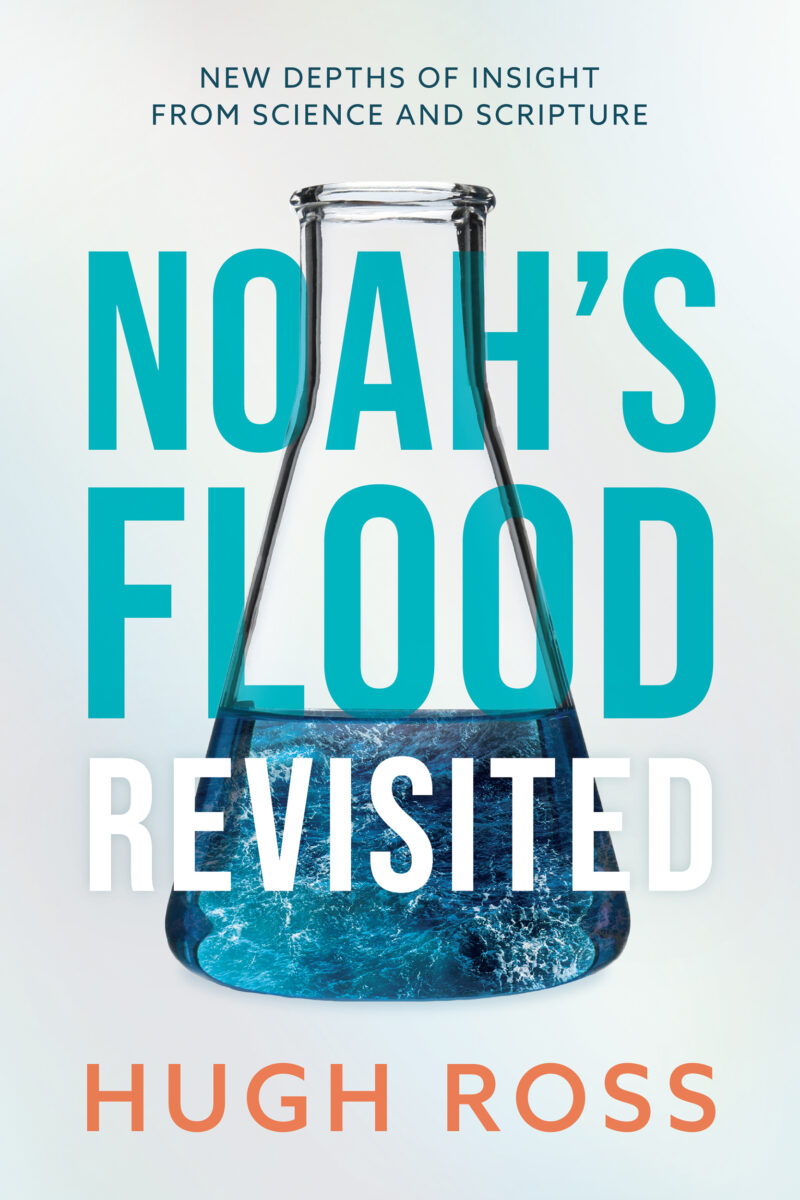
Ancient flood. Modern science. Real answers.
Scholar Hugh Ross integrates evidence from Scripture and cutting-edge science to deepen our understanding of Noah’s flood.
Long before Moses stood before Pharaoh, he stood barefoot on holy ground.Not in a palace with a crown, but in the wilderness with questions. That’s where God met him, in the flames of a bush that burned but wasn’t consumed (Exodus 3:1–6). And in that sacred… Read More
Read more →
Is God Good?
Author:
Reasons to Believe
Is God Good?
The Bible says over and over that God is good (e.g., Exodus 34:6; Nahum 1:7; Psalm 100:5; Deuteronomy 31:8; John 3:16). But it’s common to wonder—or even doubt in moments of difficulty or sorrow—if we can really believe that. What does being “good” actually mean? For many people,… Read More
Read more →
Dive Deeper
Beliefs and Values
Author:
Kenneth Samples
Is the Trinity Revealed in Scripture?
Explore how the biblical doctrine of the Trinity, though not explicitly named in Scripture, is derived from key biblical teachings revealing God as three-in-one. Read More
Read more →
Life
Author:
Hugh Ross
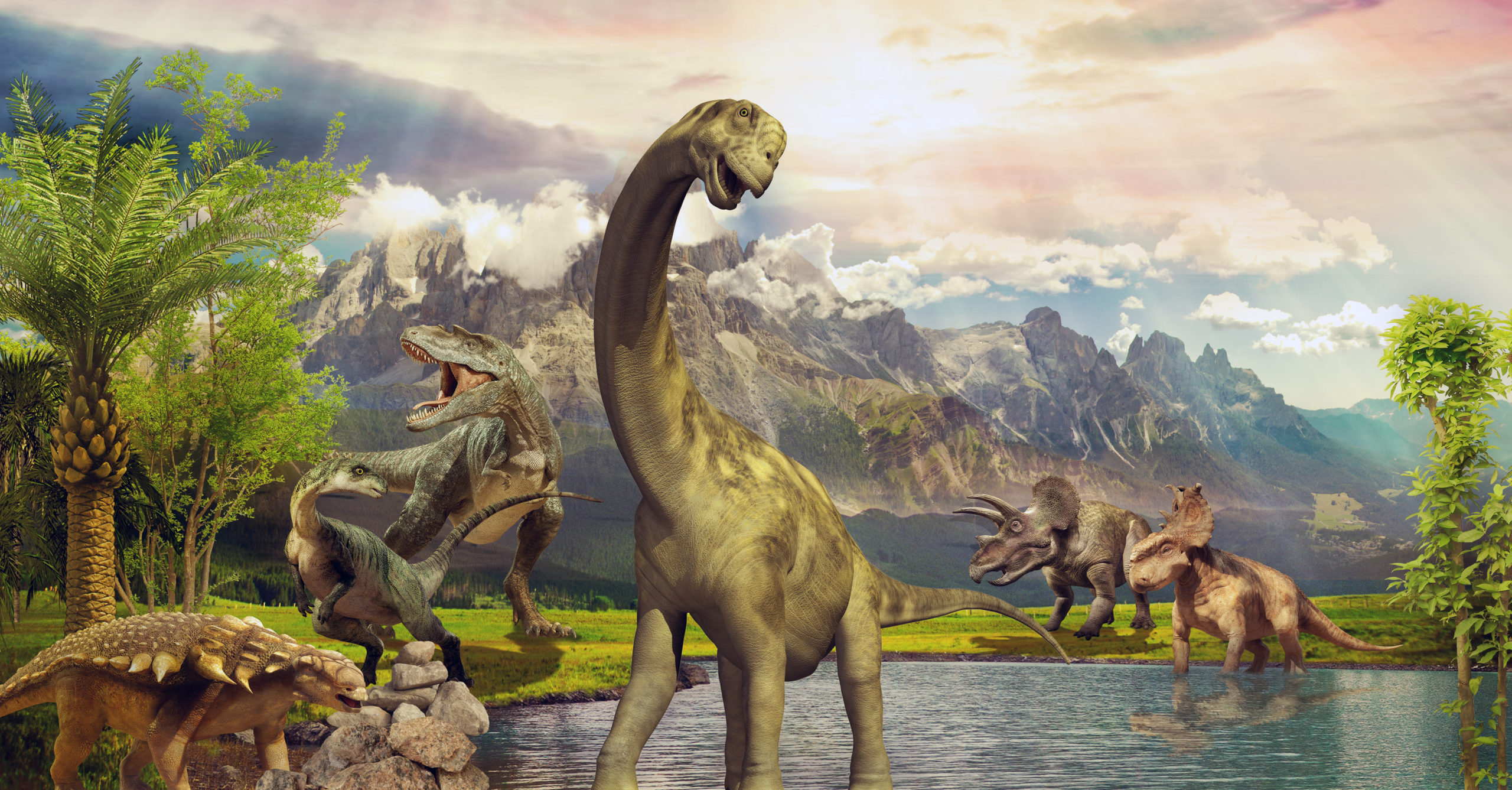
Why Did God Create Dinosaurs and Then Destroy Them?
Explore why God created and later destroyed dinosaurs, linking thermodynamics with biodiversity and Earth's rich biodeposits. Read More