From the first two humans to the billions alive today, God’s purpose for humanity has been clear. See how Scripture, history, and science reveal his love and design for us all.
“In the beginning God created the heavens and the earth” (Genesis 1:1). And among his glorious creations, he made humans: Adam and Eve.
Adam and Eve were real, literal, historical first humans designed with care. Adam was placed at the very center of God’s creation—the Garden of Eden. And, Eve joined him, when God created her from Adam’s side.
At Reasons to Believe, we affirm the special creation of Adam and Eve as the sole ancestors of humanity, a view rooted in Scripture and supported by discoveries in genetics, anthropology, and the fossil record.
Their story isn’t just a theological footnote. It’s the opening chapter of the human race, recorded in Scripture and echoed in scientific patterns we’re still discovering today.
Let’s explore the miracle of human design, the families who followed those first footsteps, the brilliance of our creativity through the ages, and the question that still stirs in every heart: What does it really mean to be human?
They stood as the first humans on Earth. Handcrafted in the image of God. A divine beginning to a very human story.
Adam and Eve lived in the Garden of Eden, a place of beauty, abundance, and divine presence. The Genesis account tells us four rivers flowed through it: the Tigris, Euphrates, Pishon, and Gihon. Today, only two remain (Tigris and Euphrates). But long ago, before the last ice age, all four may have met near what is now the Persian Gulf. Because of this, many believe Eden may have been located in that region. Some even suggest its boundaries extended into East Africa, where the Gihon connected to the land of Cush, modern-day Ethiopia.
Centuries later, science is still trying to trace that origin. Modern genetics has made remarkable strides in understanding how human populations form and spread. But we still don’t have all the answers.
What we do know is this: Current theories in conservation biology and population genetics don’t close the door on Adam and Eve. They leave it wide open. Scientifically, there is still meaningful space to see them as real, specially created, and the first ancestors of us all.
Why Does the Story of Adam and Eve Matter?
The story of Adam and Eve is the foundation of who we are and why we’re here. It explains the roots of human dignity and purpose, and the ache we all carry deep inside.
From the very beginning, Scripture reveals God’s deep love for us, seen in the care he took to prepare our world. We are the crown of creation.
He fine-tuned the universe, set the stars in place, and formed the earth with intentional beauty. Ancient forests breathed oxygen into the skies. Creatures and long-lost ecosystems enriched the soil and laid the groundwork for the resources we depend on today. Everything from cosmic laws to cellular design was designed to support advanced life: human life. Not just so we could exist, but so we could flourish.
Created in the image of God, we were given minds to think, hearts to love, and wills to choose. Not just to live in the world, but to reflect the One who made it. We were placed as stewards, not spectators. To care for the earth. To create beauty. To walk in trust. To live in communion with our Creator and harmony with each other.
A Biblical Foundation for Relationship
The Adam and Eve story also gives us the biblical foundation for marriage, gender, and sexuality. It shows both unity and distinction between man and woman equal in worth, different in role, joined in a sacred relationship.
From the beginning, God created humanity male and female, two distinct expressions of the same image-bearing nature. “So God created mankind in his own image . . . male and female he created them” (Genesis 1:27).
Eve was created with intention from Adam’s side, not his head to rule over him, nor his feet to be beneath him, but from his side, close to his heart. “This is now bone of my bones and flesh of my flesh,” Adam said when he saw her (Genesis 2:23).
Their union was more than companionship, it was a covenant. The joining of two into one flesh is a picture of profound unity, complementarity, and lifelong commitment. “That is why a man leaves his father and mother and is united to his wife, and they become one flesh” (Genesis 2:24).
In Eden, we see God’s original design for human relationships: Love rooted in trust. Intimacy covered in innocence. Distinction without division. Unity without confusion.
Marriage wasn’t a cultural construct. It was a divine creation. It reveals God’s heart for relational order, mutual honor, and the sacred bond between man and woman.
In Eden, intimacy wasn’t an afterthought. It was part of our design. We weren’t made to live alone. We were made for love, divine and human.
But love, to be real, must be free. God didn’t make us robots. He gave us the gift of choice because real love requires real trust.
And that’s where the ache begins. Adam and Eve chose independence over intimacy. They turned from the Giver of life and reached for something they thought they lacked. In that moment, sin entered the human story, not as a flaw in God’s design, but as a fracture in our trust.
Our closeness with God turned to fear and hiding. Our unity with each other gave way to blame, shame, and pain. Even our relationship with the earth shifted. Our relationship with creation was broken. Because we changed. Instead of stewards, we now were destined to damage the creation itself.
That moment in the garden wasn’t the end; it was the turning point. From perfect fellowship to broken trust. From walking with God to hiding from him. But also, from rebellion to pursuit.
Because the story of Adam and Eve isn’t just about the beginning. And it’s not only about the fall and original sin. It’s about the way back. The long arc of redemption that begins in Eden and stretches to the cross.
That’s where we are now. Living between what was lost and what awaits us anew. Still bearing God’s image. Still longing for wholeness. Still being pursued by the God who didn’t leave us in the garden.
Sin, the Fall, & Its Ripple Effect
Free will means real choices. And real choices carry real consequences. It’s a sacred gift, but not an easy one. Woven into the beauty of freedom is the possibility of rejection, of going our own way. And yet, God gave us this gift anyway.
As C. S. Lewis once described, time is like a line drawn on a page. We are a single dot on that line, moving moment by moment in one direction. But God is the page. He sees the whole story at once—every dot, every turn, where the line ends, and what lies beyond. He knew the risks. He knew the outcome. And still, he said yes to us. That’s love. The kind of love that defies comprehension but meets us in experience.
Adam and Eve were created with dignity, purpose, and the capacity to love, not by force, but by choice. They were made for a relationship: with God. With one another. And with the world around them. But they stepped outside of God’s will.
When Satan, appearing as a serpent-like creature, tempted Eve to eat from the tree of the knowledge of good and evil, she listened. She took the fruit. She ate. And Adam did the same.
And just like that, everything changed.
Something fundamental shifted in humanity. Sin entered the picture, not just as a mistake to be corrected, but as a condition that would settle deep into the human soul.
We don’t become sinners because we make poor choices. We make poor choices because something within us is already bent. Inherited. Fallen. A heart turned inward instead of upward.
Consequences of the Fall
The fall brought real consequences, not just for Adam and Eve, but for all of us.
Spiritual separation from God
The intimacy they once knew—the walking-with-God-in-the-cool-of-the-day kind—was ruptured. Not erased, but strained. Now there was distance. Where there had been openness, there was hiding. Where there had been delight, there was dread. Where there had been presence, there was shame.
Genesis 3:8 tells us that after eating the fruit, “they heard the sound of the Lord God walking in the garden in the cool of the day, and the man and his wife hid themselves from the presence of the Lord among the trees. (ESV)”
It’s one of the most heartbreaking verses in Scripture. The same God who had walked with them now made them want to run.
And if we’re honest, we still feel that distance. We feel it in the silence after our failures. In the longing for connection, but not knowing where to turn. In the subtle ways we hide from God, from others, and even from ourselves. We dress it in distraction. We numb it with noise. But the ache remains.
And yet . . . even in their hiding, God came walking. Not storming. Not shouting. Walking. As Genesis 3:9 tells us, the Lord called to Adam, “Where are you?” not because he didn’t know, but because he still wanted a relationship. Even in rebellion, God pursued.
It’s a moment bigger than judgment; it’s about grace because the God who made us for communion doesn’t give up when we fail.
Human mortality and death
After the fall, mortality became part of the human reality. What was once a life sustained in perfect fellowship now carried an end. But how that change occurred has been the subject of thoughtful debate.
Some believe Adam and Eve were mortal from the beginning, biologically capable of dying, but preserved through their ongoing access to the Tree of Life. In this view, the tree served as a sustaining grace, keeping their mortality at bay as long as they remained in fellowship with God.
Others hold that mortality itself was introduced through sin and that Adam and Eve were created to live indefinitely, and only after rebellion did death enter their physiology, as a consequence of spiritual separation from the source of life.
Both views acknowledge a vital truth: The fall brought disorder.
Regardless of the mechanics, the message is the same: Sin altered the course of human experience, introducing death, fear, pain, and disconnection. And yet, even in that judgment, God’s mercy was at work.
Nothing is so broken that God cannot redeem it. We can’t fix sin and death, but he can. Even in the garden, God was already preparing the way back. To the serpent, he said: “I will put enmity between you and the woman, and between your offspring and hers; he will crush your head, and you will strike his heel” (Genesis 3:15).
That wasn’t just judgment. It was hope. A preview of a coming Savior. One who would be wounded, but who would crush evil at its root. Scripture later calls Jesus the “Last Adam” (1 Corinthians 15:45), a title that closes the loop and brings redemption full circle.
Where the first Adam brought death through disobedience, the Last Adam brought life through obedience.
Where the first reached for forbidden fruit, the second offered his own body.
Jesus became the new head of humanity, undoing what was broken, and offering a way back to God. Through him, what was lost has been found.
Pain in childbirth
A process meant to bring life now comes through pain.
Before the fall, new life was joy, unhindered, unburdened. But after Eve acted on the serpent’s lie, the path to new life became marked by suffering. “I will make your pains in childbearing very severe; with painful labor you will give birth to children” (Genesis 3:16).
Women would now bear both the weight of that moment and the promise of future hope through childbirth. The joy of new life would remain, but now it would come through labor. Through struggle. Through vulnerability.
It’s not just physical pain. It’s emotional and spiritual too, the anxiety, the risk, the tears.
Even today, bringing life into the world reminds us that we live in the tension between what was in the Garden and what is now.
And yet, even in that pain, there’s beauty. A reminder that hope is delivered.
A strained relationship with creation
What once was harmony became hardship.
The world in which Adam and Eve were placed was lush, abundant, and responsive to their care. Work wasn’t a curse; it was a calling. Stewardship was joyful and fruitful.
But after the fall, working the ground was full of hardships. Work became toil. Provision laden with sweat. And the relationship between humanity and creation was fractured. “ . . . through painful toil you will eat food from it all the days of your life. It will produce thorns and thistles for you . . . ” (Genesis 3:17–18).
Human sin introduced dissonance where there had been harmony. And we still feel that today. We see it in our exploitation of our planet, in natural disasters, in the groaning of a creation that now carries the weight of human rebellion. As Paul writes in Romans 8, “The whole creation has been groaning . . . waiting to be liberated.” And that groan echoes with our own.
We were made to care for the world, not compete with it. To cultivate, not consume. But when we turned from God, even the ground beneath us felt the fracture.
Early Humans: From Eden Across the Globe
Every family has a beginning. Ours started in a garden with two image-bearers and a calling: to multiply, to fill the earth, and to care for what God had made (Genesis 1:28). From Adam and Eve, the first families took root. And from those families, human culture blossomed and languages, traditions, technologies, and worship began to take shape.
Even our biology carries echoes of that shared beginning: from the genetic similarity of skin-dwelling face mites to the global spread of ancient pathogens like HSV and lice.
Scientific research into early human migration confirms that our ancestors moved outward along coasts and rivers, through Arabia and Africa—exactly as we’d expect from people called to fill the earth. And as they settled in different places languages diversified, just as Scripture describes in the account of Babel (Genesis 11). So did physical features and ethnic expressions, not through separate origins, but through the rich adaptability God built into one shared human family.
A Record of Real People
Scripture doesn’t just preserve a theological message, it preserves history in the lineages it presents. It gives us names, years, and connections: from Adam to Noah, from Noah to Abraham, and eventually to Christ himself.
These genealogies were never meant to list everyone who ever lived. In the ancient Hebrew mindset, they were selective by design, focusing on key figures who carried spiritual authority or covenantal significance. Even the genealogy of Jesus in Matthew 1 arranges names into symbolic groupings of fourteen generations, skipping others to tell a larger story.
From this, we can glean something essential: The biblical timeline and the scientific record don’t need to be in conflict. The Bible doesn’t try to name every person; it names the people who carry the promise.
And science, for all its efforts, can’t explain every single thing. Yet it helps us trace the shape of human migration, genetics, and cultural development in ways that echo what Scripture has already declared to be true.
To modern ears, such numbers seem unimaginable. But we must remember: these weren’t modern humans living in modern conditions.
In the early chapters of Scripture, we’re given a glimpse of humanity at the beginning. Humans then were physically closer to the original design, genetically prestine, and living in environmental conditions unlike those of today. In a world not yet marked by industrial toxins, disease saturation, or genetic degradation, humans may have experienced a natural longevity that’s no longer available.
And beyond that, there may have been something else entirely at work: divine preservation. After all, the same God who formed life from dust is undoubtedly capable of sustaining it, especially in the generations closest to Eden.
And science is starting to catch up with that possibility. As researchers study the biology of aging, they’ve discovered factors like telomere shortening, mitochondrial dysfunction, and DNA repair failure that help regulate how and when our cells break down. Aging is now seen as a process that can potentially be slowed or even reversed. Experiments in gene therapy and cell rejuvenation are already extending lifespans in lab animals, and transhumanist thinkers are actively trying to push the boundaries of human life.
These findings echo what Scripture reveals: The limits of human life may not be as limited as once believed. And if modern science can imagine adding decades to the human lifespan, how much more difficult is it to trust that God could have ordained longer lives at the beginning of history?
So while Scripture gives us numbers that can feel foreign to us now, science offers us evidence that dares us to believe that it’s not as far-fetched as it seems. Still, long life didn’t correspond to lasting righteousness. After the fall, as humanity grew in number, so did pride, violence, and rebellion.
The Flood: Judgment and Restart
Sin didn’t stay in the garden. It followed humans wherever they went, spread through generations, and eventually, it flooded the inhabited Earth. As human communities expanded, so did their corruption. Genesis 6:11 tells us, “Now the earth was corrupt in God’s sight, and was full of violence.” Humanity, made in God’s image, had turned inward, rejecting the One who gave them life, choosing power and wickedness over reverence and relationship. In his justice, God acted. And in his mercy, he preserved a remnant.
The flood wasn’t just a downpour. It was a reset, a divine intervention to stop the spread of evil and protect the path of redemption still unfolding.
While some interpret the flood as a global event, RTB affirms a regional flood model, one in which the flood was devastating and world-ending for the people of that time, but did not cover the entire planet.
This interpretation is grounded in a close reading of the Hebrew words in Genesis. The word erets (often translated “earth”) more accurately means “land” or “region” in many biblical contexts. The word kol (often translated as “all”) can refer to the totality of a specific area or group, not necessarily a global total. Together, these terms suggest that “all the earth” in Genesis 6 could be understood as “the whole known land” or the full extent of humanity’s population at the time.
This biblically supported regional flood model aligns with Mesopotamian flood geology, where archaeological records confirm the occurrence of massive flood events in the ancient Near East. It also matches what we know from anthropology and genetics, that early humans had not yet migrated across the globe.
Significantly, this interpretation doesn’t diminish the severity of the event. The world of early civilization—corrupt, violent, and densely populated—was utterly swept away. God’s judgment was total, not in geography, but in scope.
And yet, even in judgment, God preserved hope.
Noah’s family, blameless in their generation, was spared, not as an afterthought, but as a new beginning. Through them, the story of humanity would restart. The image of God would be carried forward.
And the post-flood dispersal of humanity, traced today in both Scripture and science, would begin.
The Spread of Civilization
After the flood, rather than multiplying and filling the earth, Noah’s descendants remained in one place. They settled together in the land of Shinar and began building a city with a tower that would “reach to the heavens”—a symbol of pride, self-reliance, and rebellion (Genesis 11:4). Babel became a monument to humanity’s desire to make a name for themselves, apart from God.
So again, God intervened. He confused their language and scattered them across the land (Genesis 11:7–8). This moment mirrors what archaeology tells us: Early civilizations spread outward from Mesopotamia. As people moved, they built new communities, practiced agriculture, expressed creativity through art and worship, and developed laws and cities. In all this, they reflected something more than instinct or survival; they reflected the image of a Creator.
But language and geography took their toll. The unity once shared was lost at Babel, and with it, the clarity of truth. The God Noah’s family had worshiped grew distant in their memory. And over time, the remnants of that knowledge faded. Stories of creation, whispers of judgment, and awe of the divine became twisted.
This is where mythology took root. Instead of worshiping the Creator, people turned to created things. Pantheons formed. Deities multiplied. Gods began to look and act like people: jealous, angry, tribal, and flawed. Many of the world’s oldest religions trace their beginnings to this post-Babel dispersion.
Though Yahweh was forgotten, common themes still echoed across cultures: flood legends that mirror Noah’s, sacrifices made to restore the broken, a deep yearning to reconnect with something greater.
These similarities don’t contradict Scripture. They point to a shared spiritual memory—distorted over time, but not erased.
What began as truth became myth. What was once worship became idolatry.
As Paul later wrote,
“For although they knew God, they neither glorified him as God nor gave thanks to him . . . and exchanged the glory of the immortal God for images made to look like a mortal human being and birds and animals and reptiles” (Romans 1:21, 23).
Yet, even as people scattered across lands, languages, and beliefs, something deeper remained. Even in the distortion, the imprint of the true God remained.
The world forgot his name. But it could not erase his image.
The Image of God
We’ve traveled far from Eden. We’ve watched humanity scatter, build, rebel, and remember. But in all that movement, we often forget to pause and ask: Who are we?
Scripture answers a single phrase: We are made in the image of God (Genesis 1:27). This isn’t a metaphor. It’s identity. It’s the invisible signature written across every human soul—the divine likeness etched into our being. It’s what makes us more than dust.
More than Biology
Yes, we share DNA with other living things. We breathe the same air. We live in the same ecosystems. But we are not the same.
No other species paints its grief or sings its gratitude. No other creature builds cathedrals or launches telescopes to gaze into galaxies, then writes poetry about what it sees. A chimpanzee may use a stick to fish for termites, but a human designs a spacecraft to land on the Moon and crafts music to capture the silence found there.
These are not just survival adaptations. They are expressions of symbolism and abstraction, reflections of something more profound than instinct or biology.
Cognitive researchers refer to this as open-ended generativity—the uniquely human ability to create infinite meaning from a finite set of tools, such as language or visual symbols. Others describe mental time travel—the capacity to reflect on the past and imagine futures not yet seen. Such abilities defy evolutionary expectations and point to something far more profound: a soul bearing the imprint of its Creator.
A Moral Compass Within
Across every generation and geography, humans share a consistent sense of right and wrong. We’re not merely taught morality, we intuit it. Toddlers cry out at unfairness before they learn the word. Tribes separated by oceans still uphold justice, honor life, and grieve betrayal.
This deep moral instinct mirrors the biblical claim that “the law is written on our hearts” (Romans 2:15). In scientific terms, it’s associated with the theory of mind, the human capacity to recognize that others have thoughts, feelings, and values similar to our own.
But the theory of mind isn’t enough to explain the depth of human ethics. It’s not just awareness—it’s responsibility. We don’t just understand others—their suffering moves us. We grieve injustice. We seek reconciliation. Such moral cognition isn’t observed in other species to the same depth or universality. This isn’t learned behavior—it’s a whisper from our Maker.
We Remember. We Dream. We Relate.
Unlike animals locked in the present, humans live in three dimensions of time: past, present, and future. We recall past joys and regrets. We plan for futures not yet written. We make promises and prayers that stretch across generations.
We also ache to be known. Not just recognized, but understood. This longing speaks to the relational heart of who we are.
Our ability to form complex social bonds, layered communities, and enduring families reflects the image of a relational God—Father, Son, and Spirit in eternal communion.
Scientific studies increasingly affirm that this layered capacity for symbolism, relational depth, moral intuition, and abstract thought is unmatched in the animal kingdom. And it matches precisely what Genesis declared from the beginning: humans are exceptional.
More than Capacity, a Calling
The image of God is not just what we can do. It’s who we’re meant to become. We were made to reflect God’s character, creativity, justice, and love. That image was once radiant, but the fall introduced fracture.
The mirror cracked. Yet the reflection still glimmers.
And the story ahead will show how God, in grace, plans not only to repair that reflection, but to restore it fully.
Because if we truly bear the image of God . . . Then every life has worth. Every injustice can be answered. And every step of history bends toward redemption.
The Human Body
We’ve seen how the image of God is written into our thoughts, our relationships, and our sense of right and wrong. But his design goes even deeper, down to our bodies.
We aren’t just a product of chance. We’re crafted with care. From our cells to our senses, every part of us shows intention.
Our bodies aren’t a mess of random pieces that somehow work. They’re a masterpiece, put together with wisdom and purpose. Each system. Each process. Each tiny detail. All of it points to a Creator who designed us on purpose and for a purpose.
Intelligent Systems, Not Accidents
Our DNA holds billions of base pairs, encoding more precise information than any software ever written. It operates like an ultra-efficient computer operation and an adaptive control system—storing, correcting, and replicating with astonishing accuracy. Each cell in our body contains a full copy, working in harmony with thousands of others to maintain life.
Our immune system detects and destroys threats with layered complexity that researchers are still trying to fully understand. It adapts, remembers, and self-regulates with remarkable precision—functioning like a personalized defense network tailored to every body.
Even our gut bacteria help train these immune responses, forming a kind of built-in coaching system that protects us from birth and adapts to our environment and diet in real time.
And our brains?
They’re wired not just to process information, but to synthesize, adapt, and even rewire.
The design of neurons, complete with branching dendrites and signal-routing architecture, reflects engineering sophistication beyond our current understanding. The brain can learn languages, solve problems, experience emotion, and create beauty—all while managing involuntary systems like heartbeats and breath.
Far from being the result of randomness, our bodies showcase systems that are optimized for function, resilience, and repair, reminders that we are fearfully and wonderfully made.
Human eye
MRI of human brain
Human appendix under microscope
Flaws or Features?
Some people claim the human body is poorly designed. But many of these so-called “flaws” are trade-offs, intelligent compromises that favor one benefit over another.
Take the birth canal, for example. It’s often said to be too narrow, making childbirth risky. But this challenge, sometimes thought of as an “obstetric dilemma,” comes from a careful balance: a pelvis shaped for walking upright and a birth canal just wide enough to deliver a baby with a big brain. The size of our brain points to our unique ability to think, reason, and create.
Or think about the appendix. For years, people thought it was useless. Now we know it helps support the immune system, especially in early life. Even morning sickness, once seen as a problem, may protect unborn babies from harmful foods and toxins.
The human eye is another marvel of design. Though critics have argued that the inverted retina is inefficient, new research shows that it provides critical signal filtering, light funneling, and protective layering, making our vision more sensitive, not less.
And the mitochondria in our cone cells not only fuel energy but also act like microlenses, helping us perceive fine visual detail with stunning precision.
These discoveries don’t diminish the design; they deepen our appreciation for it. What seemed like bad design at first turns out to be thoughtful planning, after all.
Human Tools & Technology
We build. We imagine. We shape the world around us in ways no other creature can. From stone tools to artificial intelligence, we create because a Creator made us.
Our inventions aren’t instinct. They’re intentional. They’re stories we carve and code, generation after generation. Whether it’s cave art painted by firelight or lines of software on a glowing screen, our drive to design points back to the One who designed us.
Even at the cutting edge of science, the pattern holds. At the University of Manchester, scientists built robots so small they can move atoms—molecular-scale machines that mimic the precision of nature itself. As biochemist Fazale Rana notes, no animal has come close to this kind of breakthrough. Not in the past. Not now.
The ability to take knowledge and turn it into innovation is uniquely human and deeply divine. Our history of progress is confirmation. While Neanderthals remained trapped in technological stasis for hundreds of thousands of years, anatomically modern humans began to innovate rapidly, especially after the emergence of symbolic language.
Art was born. Cities were built. And one day, we touched the Moon.
This creative leap, one no other species achieved, reflects the open-ended generativity embedded in our design. It’s not just what we build; it’s what our tools say about us. We aren’t driven by mere survival. We reach for beauty, meaning, and the future.
Innovation and the Weight of Responsibility
But every advancement brings with it moral tension. As our tools become more powerful (biotech, AI, and gene editing), they begin to challenge not only what we can do, but what we should do.
Some scientists are now exploring ways to reverse ageing, engineer genes, and augment cognition. While these breakthroughs could offer healing, they also risk crossing into redesigning what God has made.
And this—this is where the image of God matters more than ever. Because if we truly bear his image, then our identity isn’t something we invent. It’s something we inherit. Our dignity isn’t earned. It’s embedded.
And our purpose? It’s not to rise and become gods. It’s to reflect the God who already is.
But when we separate innovation from reverence, things unravel. Our tools become our temptations. Addiction grows. Anxiety deepens. Connection fractures. And slowly, we start to forget what it means to be fully human.
Today, we build machines that mimic thought, creativity, and even empathy. But just as the idols of old, carved in wood and stone, were not gods, our creations are not us. They may echo our brilliance. But they can’t carry our breath. They can replicate our patterns, but they cannot reflect God’s image. Only we can.
And just like in Eden, the choice still lies before us: to use our God-given abilities for good, or to grasp for control. To honor God with our creativity, or to crown ourselves with it.
Humanity’s Hope
The story of Adam and Eve isn’t just ancient history. Though we’ve traveled far from the Garden, their story still shapes ours. It tells us who we are, what went wrong, and why we need a Savior.
Today, many look to science and technology to become what only God can make them. Transhumanism promises a future where we transcend our limits—more intelligent, stronger, and more connected than ever. But it’s a false gospel. Our hope doesn’t come from what we build. It comes from who built us.
From Eden to now, our identity and future rest on this unshakable truth: We were made by God, for God. Every part of what makes us human reflects the image we bear—an image fractured by sin, yet never erased. In our brilliance and brokenness, through progress and pain, the imago Deiwhispers: We’re not an accident. We’re not machines. We’re not alone.
Because while sin shattered the mirror, God never stepped away from the frame. His plan for redemption began in Genesis, moved through generations and covenants, and was fulfilled in Jesus—the Last Adam—who came to restore what was lost.
We are defined by a God who made us in his image, redeemed us through his Son, and invites us to walk with him again.
As you reflect on what it means to be human, made in God’s image, and invited into his redemptive story, we invite you to explore our full library of resources. You’ll find thoughtful articles and insights to sharpen your thinking, encourage your heart, and remind you not just of who you are but whose you are.
Featured Resource
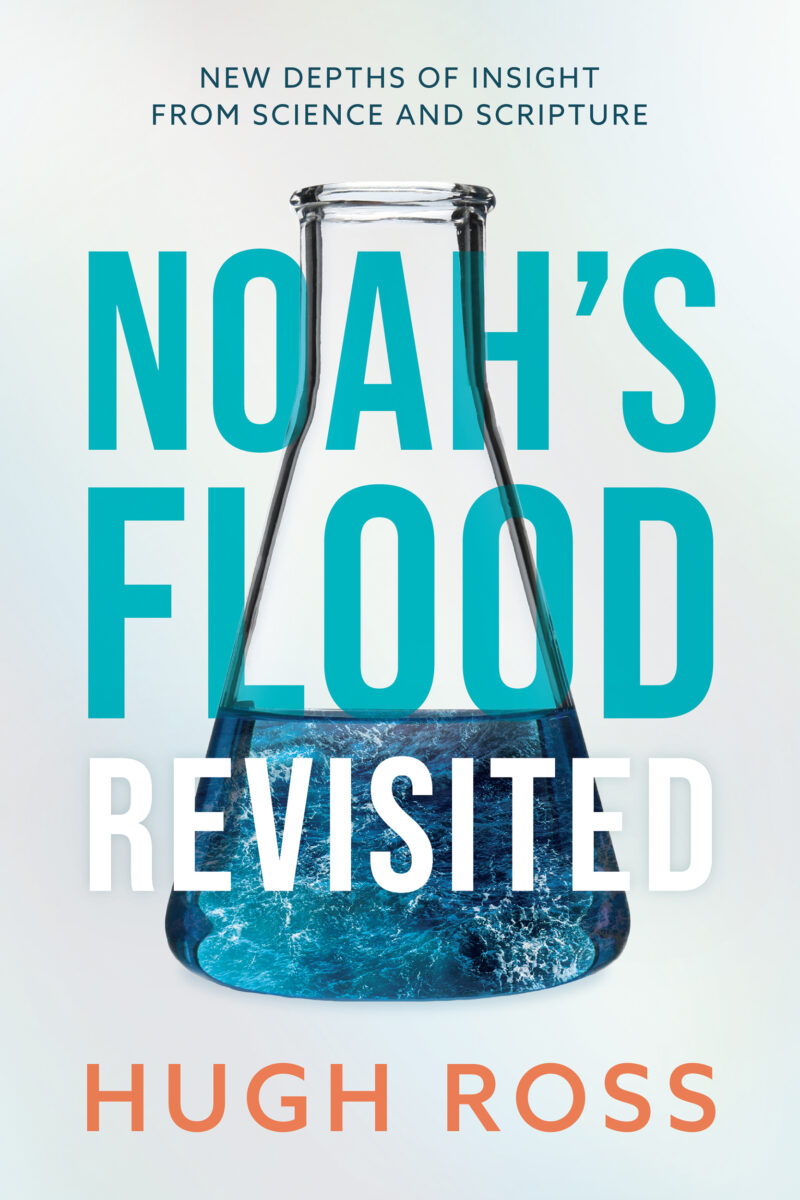
Ancient flood. Modern science. Real answers.
Scholar Hugh Ross integrates evidence from Scripture and cutting-edge science to deepen our understanding of Noah’s flood.
From the dawn of creation, the family tree of Adam and Eve branches out like an epic saga. The Genesis genealogy isn’t just a list of names—it’s a living testament to God’s grand design. As we trace the Adam and Eve family tree, we uncover a lineage that… Read More
Read more →
Early Humans
Author:
Reasons to Believe
Neanderthals vs. Humans: How Do We Compare?
Neanderthals and early humans—how different were they, really? Imagine walking the earth 50,000 years ago. You may have encountered creatures who looked somewhat like us, but weren’t quite human. They hunted, gathered, and perhaps even cared for each other in ways similar… Read More
Read more →
Dive Deeper
The Bible
Author:
Hugh Ross
When Did God Create Adam and Eve?
Explore the biblical and scientific perspectives on when God created Adam and Eve, highlighting evidence that supports an age range between 55,000 and 230,000 years ago. Read More
Read more →
The Bible
Author:
Hugh Ross
Why So Much Time between the Creation of Earth and Adam?
Explore the time gap between Earth's creation and Adam's existence through science and biblical perspective. Read More