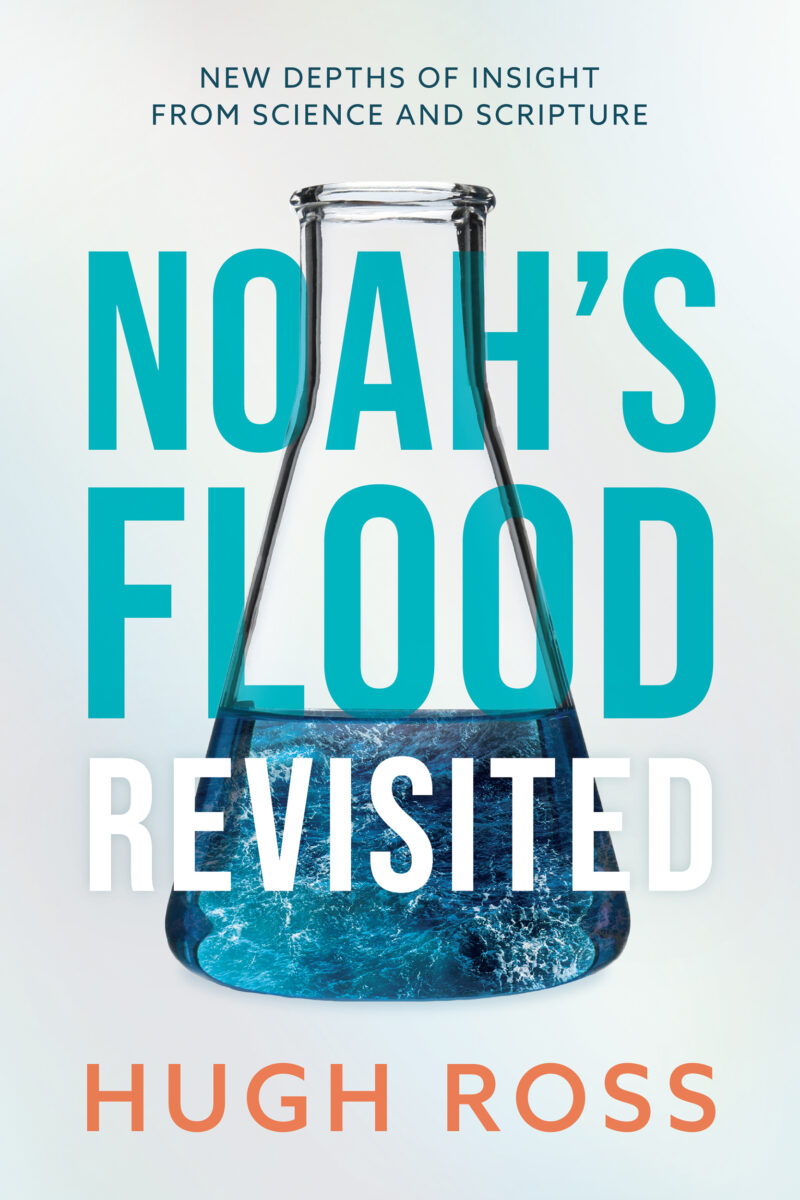
Creation displays design. From the vast cosmos to the tiniest life-forms, God’s power, wisdom, and artistry shine through. Learn how modern science and Scripture tell the same story.
Where did we come from? Why are we here? Is this life all there is?
That’s where the story of creation begins.
When we ask how we got here, we’re often really asking why. And behind that question is another: Is there Someone behind all this? We believe there is.
Not just a force or formula, but a Creator—personal, intentional, and involved. The kind who paints sunsets and programs the human cell. Who speaks stars into existence and calls us by name.
Creation isn’t just about beginnings—it’s about designs, purposes, and an entire universe that didn’t happen by accident. Its order and complexity point beyond chance to intentional design.
What we’re studying is ancient—written into both Scripture and the natural world. As we explore and test those records, we’re invited to better understand the Creator behind them.
What Is Creation?
Creation is . . . well, everything.
From galaxies spinning millions of light-years away to the freckles on your child’s nose.
From the oxygen in your lungs to the fireflies flickering on a summer night.
It’s the visible wonders we marvel at—and the invisible realities Scripture assures us are just as real.
There’s the physical world: oceans, mountains, light, life, you and me, all the earth.
And there’s the spiritual realm: angels, principalities, the heaven we hope for, and the battle we often forget we’re in.
We sometimes view creation like a textbook chapter or a theological category. But it’s more than that. It’s the stage we live on, the air we breathe, and the story that began before we ever arrived.
And just as Scripture is God’s written revelation, creation is his visible one. Together, they form what theologians call dual revelation, God revealing himself through both his Word and his world. Every leaf, every lightning bolt, every cell in our bodies declares, “Someone made this.”
As the apostle Paul writes in Romans 1:20: “For since the creation of the world, God’s invisible qualities—his eternal power and divine nature—have been clearly seen, being understood from what has been made.” Creation is God’s introduction to the world.
God Created. He Is Beyond Creation.
God is not part of creation. He is not the fire. He is the One who lit the first flame. The world is not divine. It is divinely made.
Genesis 1:1 begins simply:
In the beginning, God created . . .
No committee. No chaos. Just God—speaking, forming, filling. As God in Isaiah 44:24 declares, “I am the Lord, who made all things; who stretched out the heavens alone; who spread out the earth by myself.”
He didn’t wind up the world and walk away. He’s still here, sustaining every sunrise and holding every atom together. He is beyond creation—and beautifully involved in it. As the apostle Paul states in Colossians 1:17, “He is before all things, and in him all things hold together.”
And this world? It runs on purpose. Seasons come and go in rhythm. Oceans stay in their place. Bees pollinate, and planets hold their course. DNA carries blueprints more complex than any human design. And that kind of order doesn’t come from chaos or chance events—it comes from a Creator.
Just like brushstrokes reveal the artist, creation reflects its Maker. His power and exquisite designs in galaxies and black holes. His brilliance in ecosystems. His imagination in peacocks and platypuses. His tenderness in a baby’s breath and a parent’s hand. The more we pay attention, the more we see: this world isn’t just made—it’s intentionally designed.
God Created Humans with Freedom
The story doesn’t stop with beauty. Creation was made good, very good. But then Adam and Eve chose rebellion. And their relationships—and ours—with God, others, and creation went very wrong. With it came separation, sorrow, and death—spiritual, and eventually, physical death. The fracture didn’t just affect their hearts—it had consequences for the soil, the sky, and all of God’s creatures.
Now, the glory remains in us, but it’s marred. The image is there, but it’s blurred. We pollute rivers. We struggle to grow crops and we harm the environment when we do. In a fallen state, we can’t properly care for creation. We drive creatures to extinction.
Creation feels it. The ache. The waiting. Our world remembers our stewardship in Eden but wakes up in exile because we inflict damage everywhere we go. As God declared to Adam and Eve after they rebelled against him, “Cursed is the ground because of you” (Genesis 3:17).
And through all of this, creation testifies.
The beauty of the world is evident—it’s just waiting for us to be transformed into people who have the capability of caring for the creation once again. The damaged world points to a God who is not finished with us. A Redeemer who doesn’t discard the broken, but heals us, restores us, and makes us new.
Creation in the Bible
Observing the natural world awakens something in us, but where do we turn when we want to understand it?
The Bible isn’t silent about creation. It begins there. “In the beginning, God created the heavens and the earth” (Genesis 1:1). It begins not with mythology or metaphor, but with a bold and simple statement. Scripture establishes from the start that the universe had a beginning. And that beginning needed a Creator.
Genesis 1 reads like a sequence. God speaks, and the cosmos answers. After the creation of the universe, visible light arrives on Earth’s surface. Then comes the water cycle and land. Then vegetation on the land, animals in the seas, birds and sea mammals, three advanced kinds of land mammals. And finally—humanity.
If you look closely, you’ll notice that the creation timeline in Genesis mirrors what science affirms: a universe with a beginning, a planet initially completely covered with water enveloped with clouds that keep the water dark (Genesis 1:2, Job 38:8–9), a flourishing of land vegetation before the emergence of sea animals, and people created last.
Seems fairly straightforward, yet sometimes we get tangled up in the details and can’t see the forest for the trees.
For example, in Hebrew, the word day is “yom,” and like nearly all biblical Hebrew nouns, it carries more than one literal meaning. It can refer to part of the daylight hours, all the daylight hours, a 24-hour calendar day, or a long, finite period of time. That’s why thoughtful Christians sometimes differ on the age of the earth. Some hold to a young-earth view; others see evidence of an older Earth and embrace old-earth creationism. Both approaches affirm the same truth: God is the Creator, and the story told in Genesis and beyond is true. Only the old-earth view aligns with the scientific evidence for Earth’s and life’s age and history.
There is also the rhythm of the story—a rhythm of forming and filling, of calling creation into order and calling it good.
And when the sixth creation day came to a close, God wasn’t exhausted. He was finished. He rested. And Scripture tells us that we’re still living in that seventh day (Psalm 95:11, Hebrews 4:1–11), the day of God’s rest from creating, where he continues to sustain all things and draw his people into the fullness of his promise.
The Creation of the Universe: Genesis 1
Imagine it: utter stillness. No galaxies, no gravity, no ticking of time. Just the eternal presence of God—peaceful, complete, perfect, and ready to create. Then, like a conductor in a great symphony raising his hand, God spoke. And the universe came into being.
Scientists hold to the idea of creation as a big bang—a moment when all space, time, matter, and energy came into existence. But Scripture gives us the name behind it: God. Where science points to a Creator and intent, Scripture tells us that nothing was an accident.
We live in a universe so vast that we can’t grasp it. In its entirety and complexity, its essence escapes us. Galaxies upon galaxies, scattered like brushstrokes on a divine canvas. The sheer scale is staggering—billions of light-years across, two trillion galaxies in the observable universe with more stars than grains of sand on Earth. Science helps us understand aspects of it, but for all we can’t comprehend, we’re left wondering . . .
And we ask, why so big? Couldn’t God have done this with less?
According to many scientists, the size of the universe isn’t excessive—it’s essential. The fine-tuned forces of physics that govern space and time had to be just so for life to exist on a planet like ours. The universe’s expansion rate, the density of matter, the strength of gravity—all of it had to be calibrated with breathtaking precision.
A universe with the tiniest bit less mass? It either would’ve never formed stars or its stars would not produce any elements heavier than helium. A universe with the tiniest bit more mass? Long before life would be possible, all stars would collapse into neutron stars and black holes and only elements heavier than manganese would exist.
In both cases, carbon, nitrogen, oxygen, sodium, magnesium, phosphorus, potassium, and calcium would not exist. Physical life would be impossible anytime, anywhere in the universe. But the universe we’re in? It’s just right.
Some scientists suggest our universe might not be the only one. Enter the multiverse—the idea that there could be countless other universes, each with its laws of physics. Ironically, this idea has its origin in the biblical descriptions of the angelic realm, heaven, hell, and the new creation.
To some, the multiverse sounds like science fiction. To others, by appealing to an infinite number of distinct universes, it’s an attempt to explain the fine-tuning of the universe, Earth, and Earth’s life without invoking a Creator.
But even multiverse theories don’t escape the need for a beginning and, hence, a Beginner. Furthermore, the same appeal to an infinite number of universes to explain away designs by God simultaneously explain away all designs by humans. That is, such an appeal is philosophically incoherent and inconsistent, and therefore, meaningless.
Research confirms that even the most mathematically sound multiverse models—like those based on inflationary cosmology—still require a singular starting point. As astrophysicists note, even an eternally inflating space must have had a beginning.
That means, no matter how many bubbles, branches, or alternate realities we imagine, something—Someone had to start it all. So, whether we live in a universe or a multiverse, the case for a Creator doesn’t shrink—it shines. The cosmological argument still holds: Everything that begins to exist has a cause. The universe began to exist. Therefore, the universe had a cause. And that cause is God.
And maybe the most astonishing truth? The God who shaped galaxies also shaped you. He crafted black holes and humans with the same care. In all this vastness, he sees you—not as a speck, but as someone spectacular.
Made in his image. Known. Loved.
The universe, in all its wonder, isn’t a distraction from faith—it’s an invitation. An echo across the stars saying, “Look closer. There’s more.”
The Creation of Earth
If the universe is the stage, Earth is the setting—and not just for any tale, but one of the most incredible stories ever told. A story that begins with a bang and the voice of a Creator who crafted a home with purpose.
Even the timing of Earth’s arrival in cosmic history is just-right. It formed late enough for the universe to cook up the heavy elements life requires, and early enough to host generation after generation of image-bearers. That’s not chance. That’s choreography.
And then there’s the Moon. Quiet, faithful, steady. Its gravity draws the tides and writes the rhythm of the sea, but it also holds Earth’s rotation axis tilt steady, like a hand on the small of the back, keeping our seasons in order and our climate from spinning out of control.
All of which brings us to a question many have asked beneath star-filled skies or in Sunday school:
When was Earth created?
Some hold to a young-earth view—believing our world is only a few thousand years old, having been shaped in six consecutive 24-hour calendar days.
Others, including many old-earth creationists, see the breadth of time as God’s supernatural fingerprints spread across billions of years, not as a contradiction of Scripture, but as a deeper understanding of it. They read Genesis 1 as a sacred story unfolding step-by-step through divine designs where at no point does God delay any of his creation works. It testifies to a God who paints with eternity in mind.
The age of the earth and its history is a wonder to behold. God made Earth with wisdom, with power, with purposes, and with love. Earth isn’t just rock, soil, and sea. It’s a masterpiece. A dwelling place. A carefully prepared home. And all of it—every mountain range, every orbit, every hour etched into the age of the earth—points not just to how we got here . . . but to Who is behind it all.
The Origin of Life
If the earth were crafted as a home, then life is the warm light in its windows—the sign that someone lives here. And not just some microbes, plants, animals, and people, but Someone with intention. Intelligence. Imagination. Because, as we’ve discussed, life didn’t just “happen.”
Even with all our microscopes and models, all our theories and test tubes, scientists still haven’t solved the mystery of how nonliving chemicals gave rise to living cells. The simplest organism is a marvel of complexity—packed with information, purpose, and coordination.
The odds are staggering. The mechanisms are elusive. And yet, here we are—walking miracles wrapped in flesh and blood.
The beginning of life on Earth points to a Creator not only because naturalistic explanations fall short, but also because what we do see is too precise, too interconnected, too beautiful to be the result of chance.
Life’s Structures and Characteristics
Life, even in its simplest form, is no accident. It’s information-rich, detail-driven, and purpose-filled. Just look at DNA—a microscopic library packed with instructions more advanced than any software we’ve ever coded. This isn’t just chemistry. It’s communication. And communication implies a Communicator.
From the way cells replicate to how wounds heal, every function operates within narrow, life-permitting parameters. Life doesn’t just survive—it adapts, maintains itself, and passes on blueprints for the next generation. That kind of foresight doesn’t evolve from chaos. It requires intention.
Plants and Animals
From coral reefs that breathe with colors to birds that migrate across continents without a map; from photosynthesis to echolocation to the eyes and spring-loaded tongue of a chameleon —creation doesn’t just work. It astonishes. God could’ve made the world only functional. But instead, he made it beautiful.
These creatures weren’t cosmic filler. They played a role long before humans walked the Earth—oxygenating the air, enriching the soil, cycling carbon, and preparing a planet to be inhabited by us. And in doing so, they remind us that our God is not only powerful, but poetic—a Designer who loves both purpose and wonder.
Genesis 1 tells us that God made the vegetation first, then animals—on land, in sea, and sky—and last of all humans, calling them all “very good.” Psalm 104 echoes that progressive creation in lyrical celebration. “The lions roar for their prey and seek their food from God . . . when you take away their breath, they die and return to the dust” (Psalm 104:21, 29). And then, almost like a refrain of hope continues: “When you send your Spirit, they are created, and you renew the face of the ground” (Psalm 104:30).
This cycle—life, death, renewal—is not described as a flaw. It’s part of a world called good. At first glance, that may seem strange. We don’t like death. We resist it. Grieve it. It feels wrong—and rightly so.
But in creation, life from death is the pattern. The predators don’t destroy the ecosystems—they sustain them. Remove the lions and cheetahs, and the herbivores suffer. Take away the wolves and foxes, and the health of other forest creatures deteriorates and their death rate skyrockets.
Death in nature, it turns out, isn’t chaos. It’s design.
Psalm 104 doesn’t flinch at this reality. It praises God for it. The food chain. The seasons. The letting go. Through it all, God is not accused—he is adored.
Even unbelieving scientists agree: Creation is so elegant, so efficient, that we now study animals to copy their designs. Cameras modeled after eyes. Aircraft designed like birds. Adhesives inspired by gecko feet. Entire fields like biomimetics exist because nature is not only useful—it’s brilliant. And brilliance isn’t born from chaos. It comes from a Mind.
God gave animals more than function. He gave them diversity. Personality. In some cases, what researchers call “soulishness.” Scripture doesn’t fully define this, but it hints at something more in the nephesh creatures—mammals and birds—beings tamable by humans and capable of loving relationships, emotions, even loyalty.
In Job 39, God delights in the wild donkey’s freedom, the horse’s fearlessness, and the ostrich’s speed. And in Genesis, he brings the animals to Adam, not to be dismissed, but to be seen, named, and known, highlighting their value and his responsibility to steward them.
Old-earth creationists place these creatures within the fifth and sixth creation yôms—those sweeping epochs of creation where sea life and land animals filled the earth in preparation for humanity. Genesis may not name them, but the layers of Earth’s history bear their fingerprints.
So yes, animals died before the fall. And in doing so, they helped prepare the way for us, for the breath of God to enter dust. It doesn’t diminish the beauty of creation; it deepens it. It shows a God who works through time, through cycles, through ecosystems, extinction, and elegant design.
And perhaps, as we listen to the hum of a beehive or hold a fossil in our palm, we’re not just observing nature. We’re hearing a familiar refrain—a truth that runs beneath it all: Life comes from death.And that pattern doesn’t end with creation. It points to a Savior. The One who entered death and came out the other side.
Even now, the world echoes that rhythm. From ashes, beauty. From endings, beginnings. From death . . . resurrection.
Creation has always known the pattern. And now, so do we.
Creation or Evolution?
At some point, usually between biology class and the latest nature documentary, we all bump into the question: Are we the product of evolution or creation? And it’s a good question. Because when we look at the world—the way species adapt, how finches change beaks, how bacteria become resistant—it’s clear: living things do change.
Microevolution—those small, observable changes within a species—isn’t up for debate. It’s commonly held as real as the wrinkles that sneak up on us or the way your neighbor’s tomato plants get hardier each season. It’s variation, adaptation, resilience—part of the built-in brilliance God designed into life.
But macroevolution—the idea that all life shares a common ancestor, that fish turned into philosophers over millions of years—that’s a different story. It’s not a certainty. And it rests on the hope that tiny changes can accumulate over time into giant leaps, creating new organs, new systems, and even new species, a hope that is dashed by the Avalon and Cambrian explosions of life. It’s like saying a rowboat, left to the waves long enough, might become a cruise ship.
But that raises another question: Did God use evolution to create?
Some Christians say yes—God set the process in motion and let it unfold over time. They’re called theistic evolutionists or evolutionary creationists. They see evolution not as a godless accident, but as God’s chosen tool.
But many old-earth creationists see it differently. They believe God created over time, but not through the process of macroevolution. Instead, they see purposeful acts of biblical creation throughout Earth’s history—distinct bursts of design that science keeps bumping into.
Because evolutionists can’t explain the origin of life, they focus on what happens after life has already begun. However, they can’t account for the explosion of body plans in the Cambrian layer. It can’t explain DNA’s information code, or the way human consciousness sings songs that evolution never taught it.
Longer answer? Humans and chimpanzees may share some genetic similarities, but similarity doesn’t equal identity. In fact, humans share a surprising amount of DNA with dandelions—yet no one’s arguing we’re the same kind. Genetic overlap is common across all life because we share a common Creator and a common chemistry. What sets us apart isn’t our DNA sequence—it’s what God breathed into us. Something no microscope can locate or measure.
Scripture tells a different origin story—one where humans weren’t the result of random mutation but the intentional masterpiece of a personal God. Formed from dust, yes—but breathed into with divine life. Made in his image, crowned with purpose, set apart with a spiritual capacity that nothing else in creation shares. We’re not just intelligent animals.We’re soul-bearers.
That doesn’t mean we ignore science. It means we listen closely—because sometimes science is catching up to what Scripture has always whispered: that we are fearfully and wonderfully made. Not accidents. Not apes with better posture. But sons and daughters of a Creator who still walks with us in the cool of the day.
And if that’s true—if humanity bears the image of God—then it changes everything. Because it means the story of creation isn’t just about where we came from. It’s about who we belong to.
Human Origins & Why We Exist
Every story has a beginning. But not every beginning is intentional.
You might have met your spouse reaching for the same peach at the grocery store. That moment, unexpected and unplanned, became the start of your story together. It happened—but it wasn’t your design.
Not so with humanity.
Our beginning wasn’t a coincidence or cosmic chance. It was deliberate. Our story starts in a garden—not with a bang, but with breath.
A man drawn from dust. A woman fashioned from his side.
Adam and Eve weren’t symbols or myths. They were real, historical people—formed not from primates, but with purpose. Genesis 2 tells us that God formed Adam from the ground—asa, crafted from existing material—and then breathed into him the breath of life. That breath changed everything. It wasn’t biology that set him apart. It was the image of God.
Eve, made from Adam’s side, shared in that image—completing a picture of communion, complementarity, and calling.
Animals, too, had been made from the dust, but not like this. Not with breath. Not with an image. To be made in God’s image means we were created to reason, relate, build, and commune. It means we were designed to reflect his character and carry his purposes. No other creature, no matter how intelligent or intricate, was given that role.
And yet, as soon as Adam and Eve reached for autonomy over intimacy, something broke. Sin entered—not just the story, but the soul. The whole fractured. What was united was divided. They wanted wisdom, but they gained shame. They were made for communion, but they chose control.
And so death entered—not the biological kind alone, which had already touched the animal kingdom—but a spiritual kind. A separation. A sorrow. A fall.
Still, traces of Eden remain. The divine breath didn’t disappear—it whispers in every act of compassion, every work of beauty, every ache for eternity.
How Archaeology Points to the Creation Story
When modern humans appear in the archaeological record, the difference is staggering. There’s a sudden burst of creativity. Tools become refined. Symbols begin to surface. There’s music, art, burial, worship. Some anthropologists refer to it as the sociocultural big bang. We think of it as the image of God in motion.
No other hominin, including Neanderthals, left behind this kind of legacy. While their tools remained essentially unchanged for hundreds of thousands of years, human tools developed to become precise, complex, and symbolic. In just several thousand years, human technology advanced from the bow and arrow to putting humans and vehicles on the Moon. It wasn’t instinct evolving—it was intention appearing. It was a signature.
And it’s not just our culture that points to something greater. Our bodies do, too. The human brain is one of the most complex objects in the universe. It not only calculates and remembers, it creates, mourns, and dreams. The blood supply to our brains comes with built-in redundancies. The female brain even restructures during pregnancy to strengthen the bond between mother and child.
That’s not haphazard. That’s craftsmanship.
Critics have pointed to the human retina as flawed, but its inverted retina is a marvel of astonishing biological engineering, allowing for metabolic support that keeps vision sharp and sustainable. Our speech? Our entire anatomy and neurological systems are intricately designed to make possible complex communication even under severely challenging conditions such as cocktail party listening.
Even our motion testifies to meaning. Hands that paint. Fingers that suture. Voices that sing. Feet that dance. Hearts that break and love again.
We were made for more than mere existence. We were made to reflect Someone.
And in the middle of this profound design lies the question of our origin. If Adam and Eve were the first, then their story is not just ancient history—it’s present reality.
We are created, not evolved. We are shaped, not stumbled upon. We are made in the image of God. And though we fell, we are not forgotten.
Because the same God who breathed life into dust still breathes grace into broken things.
The Spiritual Realm: What You Can’t See Is Still Real
Not everything real is visible. There’s more to this world than what we can hold in our hands. Sometimes we can feel it. A moment that didn’t make sense, but somehow meant something. A shiver down the spine. A peace in the middle of panic. The sense that something—Someone—is near.
We chalk these moments up to lots of things: goosebumps, intuition, a hunch. But sometimes, it’s holiness brushing past. As if the curtain of reality pulled back for just a moment, and we caught a glimpse of something more profound.
More than mountains and molecules. More than traffic lights and grocery lists. More than a world of patterns and physics. There is a realm behind the realm—a dimension not less real, but more.
Scripture says it clearly and without apology:
“By him all things were created—in heaven and on earth, visible and invisible. . .” (Colossians 1:16)
Invisible. Not imaginary. Not a metaphor. Not myth. Invisible as in: just out of reach. Invisible as in: still present.
The spiritual realm is not a fantasy land or the stuff of stories whispered around campfires. It is real. Designed. Populated. A creation within creation—filled with light and darkness, angels and demons, battles unseen yet deeply felt.
And it’s not far away.
Just because we can’t see the Wi-Fi doesn’t mean it’s not working. Just because our eyes can’t detect the signal doesn’t mean there’s no message being sent.
More Dimensions Than We Know
Modern physics hints at what Scripture has said all along: There is more to the story.
Scientists exploring string theory and higher-dimensional models suggest that there may be extra dimensions we can’t access or perceive, but that could explain how gravity, relativity, and quantum mechanics, each of which is essential for life, can coexist. This extra-dimensionality doesn’t contradict the Christian worldview. It aligns surprisingly well.
Scripture speaks of a reality beyond what we can see—angels, spiritual battles, and the very presence of God. Could it be that these extra dimensions help explain how the unseen operates in the seen? That what we call miracles or divine encounters are a deeper framework we don’t yet fully understand?
It’s a perspective that helps bridge a perceived gap between science and Scripture.
Not floating babies with wings. Not charming strangers in trench coats. But servants. Messengers. Warriors. Ministering spirits sent by God to serve those who will inherit salvation (Hebrews 1:14). They protected Daniel in the lion’s den, stood watch over the birth of Christ, and rejoice every time a human heart turns home to God. They are not to be worshiped, but they do lead us to worship.
Demons, too, are real. Not the stuff of horror films, but once-glorious beings who chose rebellion. Led by Satan, they twist truth and oppose all that is holy. And while their presence is sometimes disguised—masked as “light” (2 Corinthians 11:14)—their aims are always the same: deception and destruction.
They are real, but they are certainly not in charge. Jesus is. They are not equal adversaries in a cosmic game of chess. They are defeated rebels whose time is short.
Scripture tells us plainly:
“Greater is He who is in you than he who is in the world.” (1 John 4:4, NASB).
So no, we don’t need to fear. However, we must remain vigilant, grounded in truth, clothed in grace, and alert to the battle beyond the visible.
Not anxious, but aware, avoiding all occultic activities that the Bible warns can invite demonic oppression.
The Nature of Spiritual Warfare
Spiritual warfare is a biblical concept. It doesn’t mean we live in fear or see demons behind every inconvenience. But it does mean we stay aware that not all struggles are physical.
Scripture pulls back the curtain in Ephesians 6:12, reminding us that “our struggle is not against flesh and blood, but against . . . the spiritual forces of evil in the heavenly realms.” This isn’t superstition—it’s clarity.
We are part of a greater reality, a story that spans both the visible and the invisible. And in that story, there is conflict. A real enemy. A real resistance. But also—real victory.
We’re not called to fight in our own strength, but to stand in God’s. To put on the armor of God. To pray with boldness. To discern truth from deception. To walk in the light even when shadows try to linger.
Our role isn’t to panic—it’s to persevere. Not to retreat—but to remain rooted in truth.
We are not powerless. We are not alone. The One who defeated darkness once and for all now equips us to stand in that victory every single day.
UFOs, Aliens, and Spiritual Deception
Questions about UFOs, also known as unidentified anomalous phenomena (UAPs) and alien life are more common than ever. While some people view them purely through a scientific or pop culture lens, Scripture gives us reason to be cautious. Many so-called encounters with aliens resemble religious experiences more than physical ones.
Some involve unexplained knowledge, altered states of consciousness, or disturbing visions—features more commonly associated with spiritual deception than extraterrestrial biology.
2 Corinthians 11:14 warns,
Even Satan disguises himself as an angel of light.
Not every encounter is physical. Not every marvel is from God. That’s why we’re told to test the spirits (1 John 4:1)—to hold every experience, every voice, up to the light of Scripture. If it contradicts God’s Word, it’s not from him. If it leads us away from the gospel, it’s not truth—it’s a trap.
The Role of the Heavenly Hosts
When Scripture speaks of the heavenly hosts, it isn’t just poetic language—it’s a glimpse into the throne room of heaven. These are angelic armies, organized and purposeful, praising God and carrying out his will (Psalm 103:20–21).
They filled the sky the night Jesus was born. They rolled the stone away in the morning. He rose. And one day, they will return with him. They remind us that God isn’t just Creator—he’s Commander. And he is not outnumbered. Not now. Not ever.
So when we feel the weight of the world pressing in . . . we can take heart. What we see is not all there is. There is more. More glory. More grace. More goodness than we can measure.
The same God who whispered the world into being is still speaking. The same Savior who walked through walls still walks through wounds. And the Spirit who hovered over Earth’s waters (Genesis 1:2) hovers over us, comforting, guiding, defending.
We may not see the battle. But we are never alone in it.
There is one who sees all. And he goes before us.
Creation Is Just One Chapter of the Story
From the beginning of the universe to the shaping of dust into man . . . From stars flung into the sky to angels moving in quiet places . . . This story—God’s story—continues to stretch through time. And we’re part of it.
We were created not by chance, but by choice. Not as echoes of animals, but as image-bearers of the Almighty. Fashioned with purpose. Formed for a relationship.
The world around us isn’t a random arrangement of matter and motion. It’s a masterpiece—spoken into being by a God who is both powerful and personal. And though the act of creation is complete, the Creator has not walked away. He is still present. Still involved. Calling hearts home. Writing redemption into every corner of his creation.
Maybe we’ve sensed it. In the precision of a cell, the vastness of the cosmos, or the ache that stirs in our souls. That’s not coincidence. That’s an invitation—to keep going, keep asking, keep exploring. We’ve only scratched the surface.
After all, creation is just one chapter. And the Author of it all? He’s still reaching. Still restoring. Still drawing us near.
Whether you’re wrestling with big questions or looking for deeper insight into God’s design, we invite you to explore more resources we’ve gathered into core creation topics, including:
Exploring the Age of the Universe Was your pastor right when he answered the question, “How old is the universe?” by saying that it’s just 6,000 years old? According to the estimates of many astronomers, the universe is 13.8 billion years old. The next natural question is: How can… Read More
Read more →
Evolution
Author:
Reasons to Believe
Microevolution vs. Macroevolution: Why the Difference Matters
When it comes to the theory of evolution and understanding where plants, animals, and humans came from, some people picture a single-celled organism in Earth’s early ocean. They imagine this cell changing form and function countless times over billions of years through microevolution and macroevolution. Eventually, it becomes… Read More
Read more →
Dive Deeper
The Bible
Author:
Hugh Ross
When Did God Create Adam and Eve?
Explore the biblical and scientific perspectives on when God created Adam and Eve, highlighting evidence that supports an age range between 55,000 and 230,000 years ago. Read More
Read more →
The Bible
Author:
Hugh Ross
Why So Much Time between the Creation of Earth and Adam?
Explore the time gap between Earth's creation and Adam's existence through science and biblical perspective. Read More